Start with a Drawing
Send us a drawing, 3D model, or technical specification — we analyze the material, thickness, weld type, structure geometry, and manufacturability.
We provide metal welding based on drawings, 3D models, and technical specifications: metal parts manufacturing includes frames, brackets, enclosures, supports, metal structures, assemblies, and other welded parts for one-off and serial orders.
Strong
welded joints
Steel, stainless steel
and aluminum
From 1 item
to serial production
MIG/MAG, TIG
and laser welding
Welding
based on drawings
Control
of geometry and welds
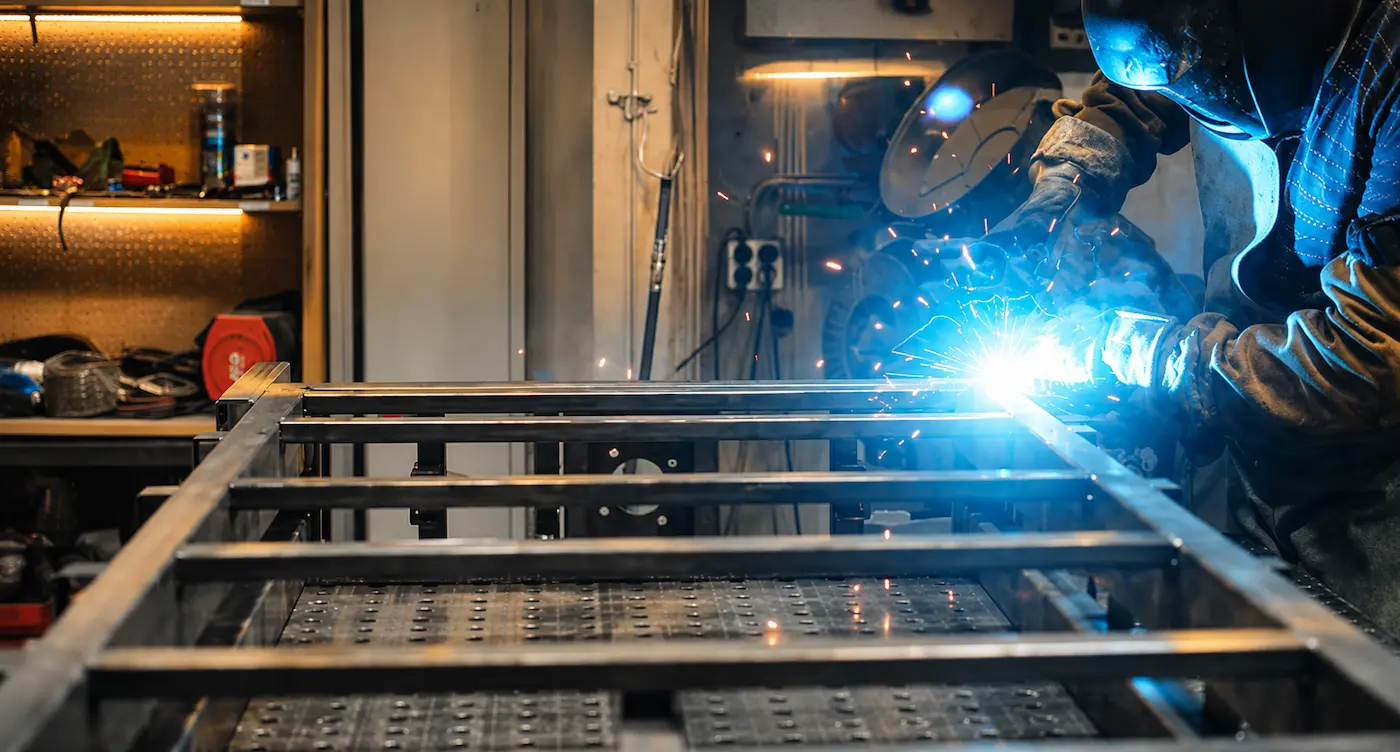
Metal welding is a process used to create permanent joints between parts by locally heating the joint area. It is used to manufacture frames, supports, enclosures, brackets, covers, metal assemblies, and structures where strength, geometry, and compliance with the drawing are important.
For steel, stainless steel, aluminum, and other metals, the appropriate welding process is selected — metal inert gas or metal active gas welding with a consumable electrode (MIG/MAG), tungsten inert gas welding with a non-consumable tungsten electrode (TIG), or another suitable technology. After welding, the welds may be cleaned, dimensions checked, joint quality inspected, and the product prepared for painting, powder coating, or subsequent machining.
We manufacture welded frames, supports, bases, stands, and load-bearing elements based on drawings or technical specifications. Before production, we check the geometry, loads, weld accessibility, and assembly sequence.
Typical products:
Welding is suitable for manufacturing enclosures, covers, boxes, panels, and protective elements from sheet metal. Such parts are often laser cut and bent on a press brake before welding.
Typical products:
Carbon and structural steel are used for most welded frames, metal structures, brackets, embedded parts, and assemblies intended for subsequent machining.
Typical materials:
Stainless steel is used for products operating in humid, aggressive, food-processing, or decorative environments. For such parts, weld cleanliness, correct welding parameters, and heat control are important.
Typical grades:
Aluminum is used for lightweight frames, enclosures, brackets, panels, covers, and specialized structures. Before welding, the alloy grade, metal thickness, heat dissipation, and requirements for weld appearance are taken into account.
Typical grades:
Welding is often part of an integrated manufacturing process: parts are first laser cut, bent, or machined, and then assembled into a finished component or structure.
What we check before production:
Welding creates internal stresses and thermal deformation. The longer the weld and the thinner the material, the higher the risk of distortion. For critical parts, tack welds, assembly fixtures, and dimensional inspections after welding are used.
Welding can be used for thin sheet metal from 0.8–1 mm as well as thick-walled parts over 20 mm. Thick workpieces may require edge preparation and multi-pass welding.
The strength of a welded joint depends not only on the material but also on the weld type and fillet size. In mechanical engineering, fillet weld sizes of 3 to 8 mm are commonly used, while the exact dimensions are determined by the drawing and applied loads.
For parts thicker than 4–6 mm, beveling is often used to achieve full penetration. The edges and weld area must be cleaned of rust, paint, oil, scale, and other contaminants.
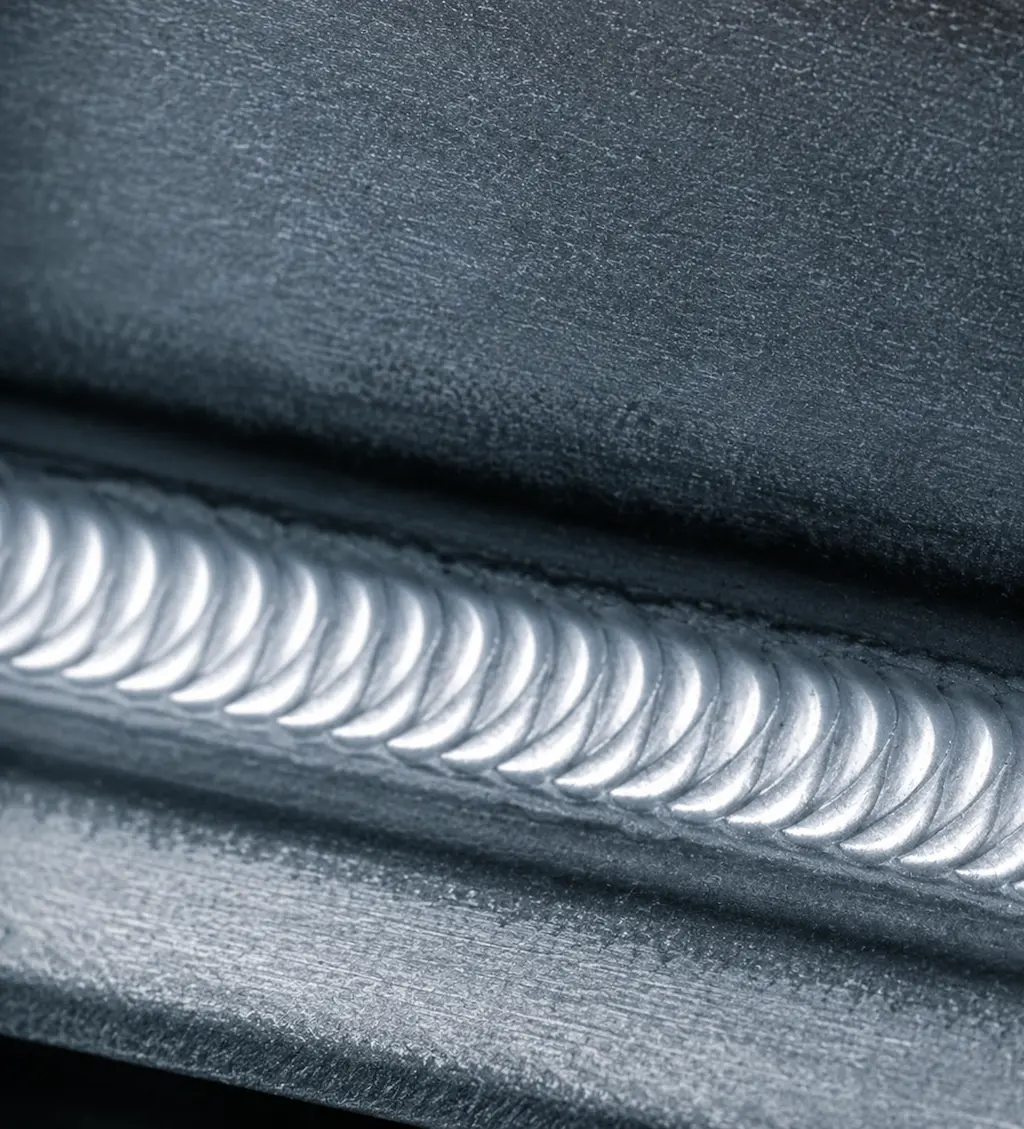
MIG/MAG welding is most commonly used for carbon steel, while TIG or specialized welding modes are used for stainless steel and aluminum. The selected process affects weld strength, productivity, and the final appearance of the product.
After welding, weld cleaning, grinding, geometry inspection, preparation for painting or powder coating may be performed. For parts with precision seating surfaces, machining is often carried out after the welding process is complete.
Send us a drawing, 3D model, or technical specification — we analyze the material, thickness, weld type, structure geometry, and manufacturability.
Receive a cost estimate and lead time before production begins, without unnecessary calls or delays.
We check the finished product for compliance with the drawing, agreed dimensions, weld quality, and overall structure geometry.
Receive welded parts and structures without coordinating production and logistics yourself — Axion Systems manages the entire process.
Examples of products and assemblies that can be manufactured by welding based on drawings, 3D models, or technical specifications.
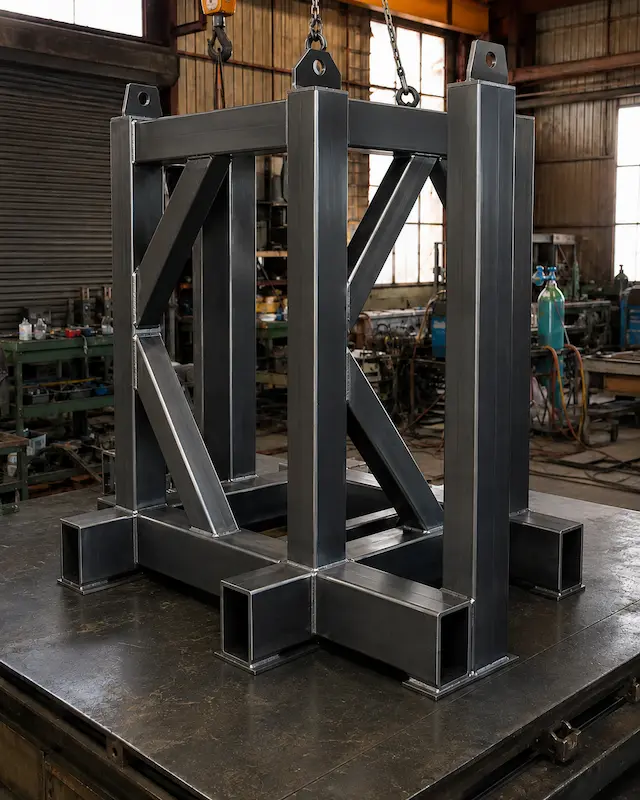
A welded frame made from structural steel and steel tubing for mounting industrial equipment. Manufactured with control of geometry, diagonals, flatness, and weld quality.
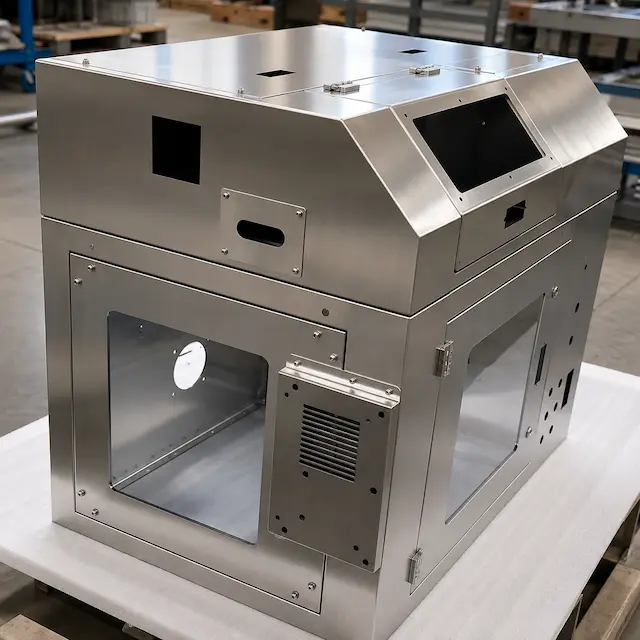
Manufacturing of sheet stainless steel enclosures with laser cutting, bending, and welding of individual components. After assembly, geometry, joint quality, and surface appearance are inspected.
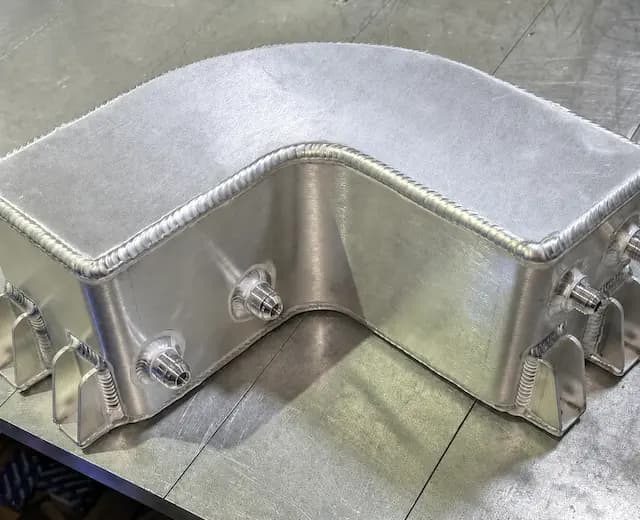
Welding of aluminum parts and assemblies with geometry control and minimized deformation.
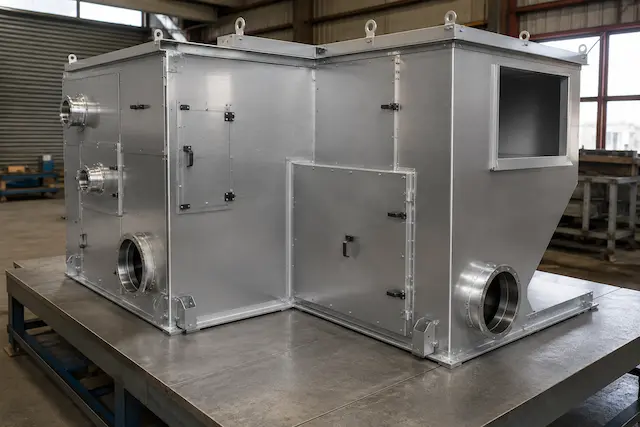
Manufacturing of large sheet metal enclosures and industrial modules with cutting, bending, welding, and assembly of individual sections.
A simple welded product or small assembly is typically completed within 1–3 business days. Frames, enclosures, batches of parts, or products requiring subsequent weld cleaning and painting usually take 3–10 business days.
The price depends on the material, metal thickness, weld length, weld type, number of parts, assembly complexity, and additional operations such as weld cleaning, grinding, painting, or machining.
Carbon steel, stainless steel, aluminum, galvanized steel, steel tubing, sheet metal, angles, channels, and plates after laser cutting can be welded.
Welding can be used for thin sheet metal from 0.8–1 mm as well as thick-walled parts over 20 mm. For metal thicker than 4–6 mm, edge preparation or beveling is often required.
MIG/MAG welding is commonly used for steel. TIG welding or specialized welding modes are often used for stainless steel and aluminum depending on material thickness, weld requirements, and the desired appearance.
Yes. You can order a single welded product, a prototype, a small batch, or serial production. For a one-off product, a drawing, dimensioned sketch, or technical specification is sufficient for an initial quote.
Yes. A single order can include laser cutting, metal bending, welding, weld cleaning, geometry inspection, powder coating, or machining of precision seating surfaces.
Upload a drawing or 3D model and we will prepare an accurate quote. Or simply describe your requirements, and we will help you work out the details.